The Tribal Instinct Hypothesis and the Social Psychology of Intergroup Relations
About Course
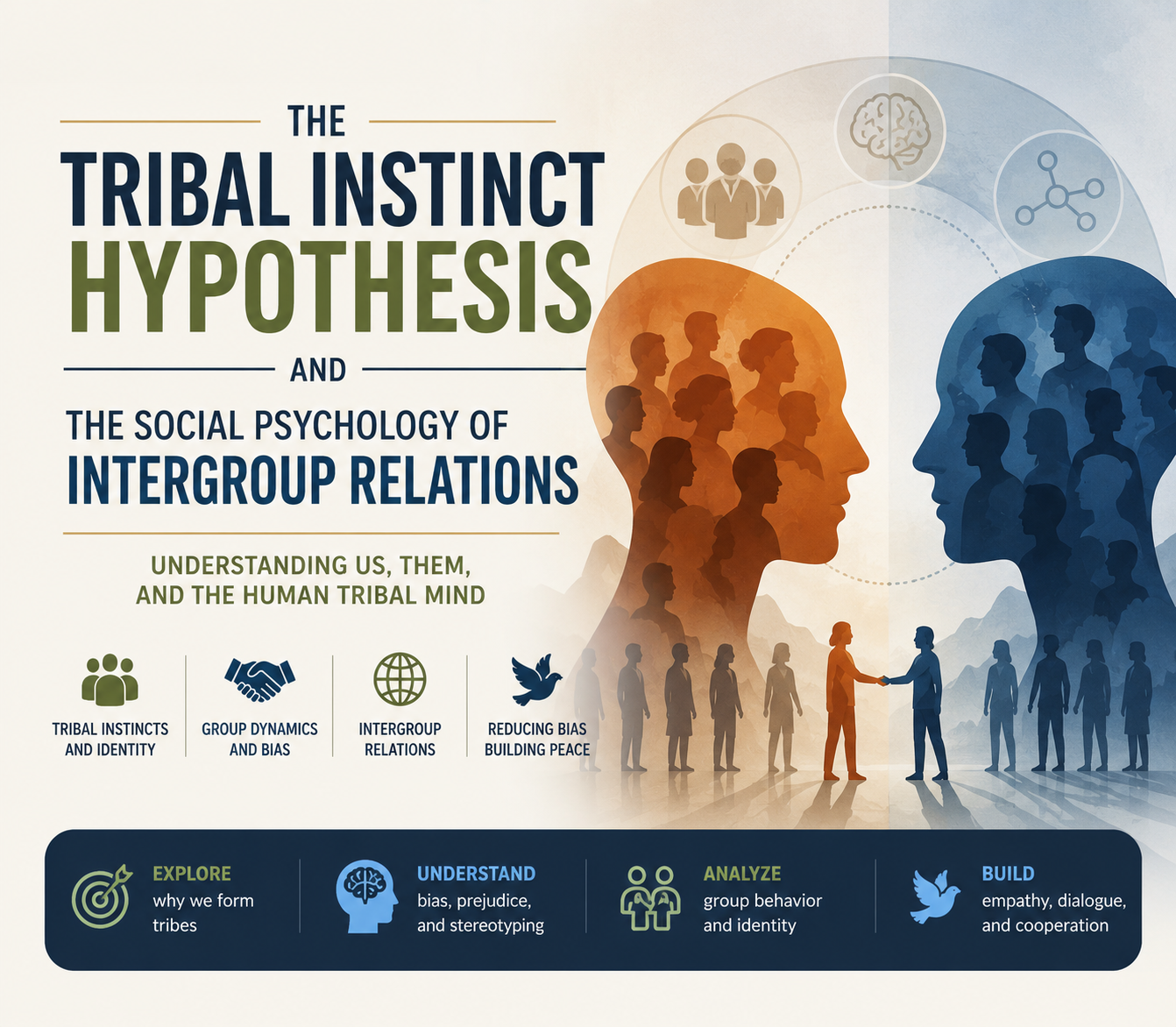
The Tribal Instinct Hypothesis and the Social Psychology of Intergroup Relations explores why human beings naturally form groups, develop loyalty to insiders, and often view outsiders with suspicion, competition, or hostility. Drawing from evolutionary psychology and social psychology, this course examines how ancient survival pressures shaped modern patterns of group identity, ingroup favoritism, outgroup bias, prejudice, competition, cooperation, and conflict.
Learners will study the Tribal Instinct Hypothesis, which explains how humans evolved psychological mechanisms for navigating group life, including the need for belonging, defense, loyalty, and coalition-building. The course also introduces the Male Warrior Hypothesis, which explores why men have historically played a major role in intergroup competition, aggression, alliance formation, and peacemaking.
Through this course, participants will gain insight into how tribal thinking affects race, ethnicity, religion, politics, nationalism, sports, leadership, and community relationships. The course also highlights practical ways to reduce bias, deconstruct harmful stereotypes, build cross-group friendships, and transform group rivalry into cooperation.
By the end of the course, learners will understand that tribal instincts can fuel division, prejudice, and conflict, but they can also be redirected toward empathy, teamwork, reconciliation, and peacebuilding.
Course Content
The Tribal Instinct Hypothesis and the Social Psychology of Intergroup Relations
-
Pre-Test Questions
-
The Tribal Instinct Hypothesis and the Social Psychology of Intergroup Relations
-
Tribal Instincts: Evolution and Intergroup Relations
10:04 -
Post-Test Questions
Student Ratings & Reviews